Colour belongs to the whole exterior.
Choose siding colour beside the roof, masonry, windows and trim that will remain. Screen colours are a starting point. Confirm the exact manufacturer colour using physical samples outdoors.
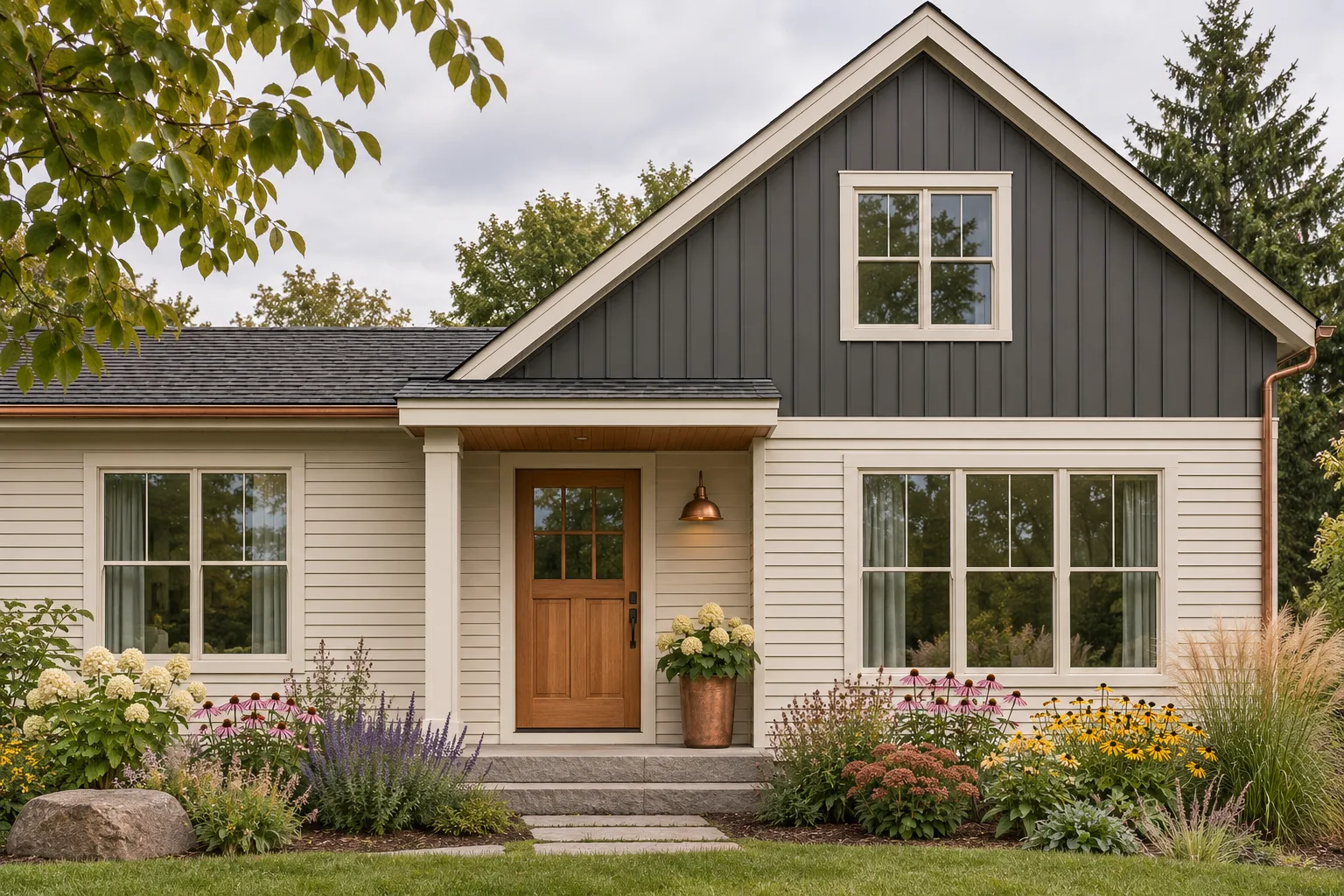 HAUSE visual concept / Illustrative finishes, not a project or product certification.
Begin with the fixed materials
List the colours that are difficult to change: roof shingles, brick or stone, window frames and large paved areas. Examine their undertones in daylight. A siding sample that looks neutral indoors can read warm, green or blue beside those permanent surfaces. Choose the relationship before choosing a fashionable colour name.
Compare shade and daylight
Move samples between the sunniest and most shaded elevations. Check them in overcast light as well. Dark surroundings and reflected garden colour can influence the impression. Record which sample you preferred and where you viewed it so the final decision has a clear reference.
Give trim a defined role
Trim can frame the openings quietly or produce a deliberate contrast. Consider the width as well as the colour. A narrow bright border reads differently from a broad muted one. Make a small palette with siding, corners, opening trim, soffit and fascia instead of selecting each component separately.
Plan an accent with restraint
Use an accent to explain the architecture. A gable, recessed entrance or separate upper volume provides a natural boundary. Ask how the colour and profile change will be built at that boundary. A good-looking rendering still needs a practical junction in the installer’s scope.
Confirm the product rules
Colour availability belongs to a specific product line. Painting an existing panel is a separate decision involving the selected coating and the siding manufacturer’s guidance. Ask before assuming that an approved factory colour and an aftermarket coating have the same limitations or warranty treatment.
Leave a traceable selection
Save the manufacturer colour name and code with a photograph of the labelled sample. Have the written order repeat those details. Keep an extra labelled piece if the project allows. Future matching involves the product, age and exposure as well as the name on the original colour card.
A project conversation
A charcoal roof and warm stone entry can support several siding palettes. Compare warm ivory, soft grey and muted sage beside the actual stone before refining the trim contrast. The on-screen bench helps narrow the shortlist, then the physical samples decide it.
Bring these questions
- Which colour code is being quoted?
- Will the retained windows work with the trim?
- What are the coating and warranty restrictions?
Read the original guidance
These sources support the principles discussed. Use current instructions for the exact product and confirm applicable local requirements. International technical resources explain mechanisms; they do not establish Canadian approvals.