A small repair still needs a clear plan.
A siding repair depends on the exact product, surrounding condition and practical replacement boundary. Assess the cause of damage and the appearance of the proposed match before approving the work.
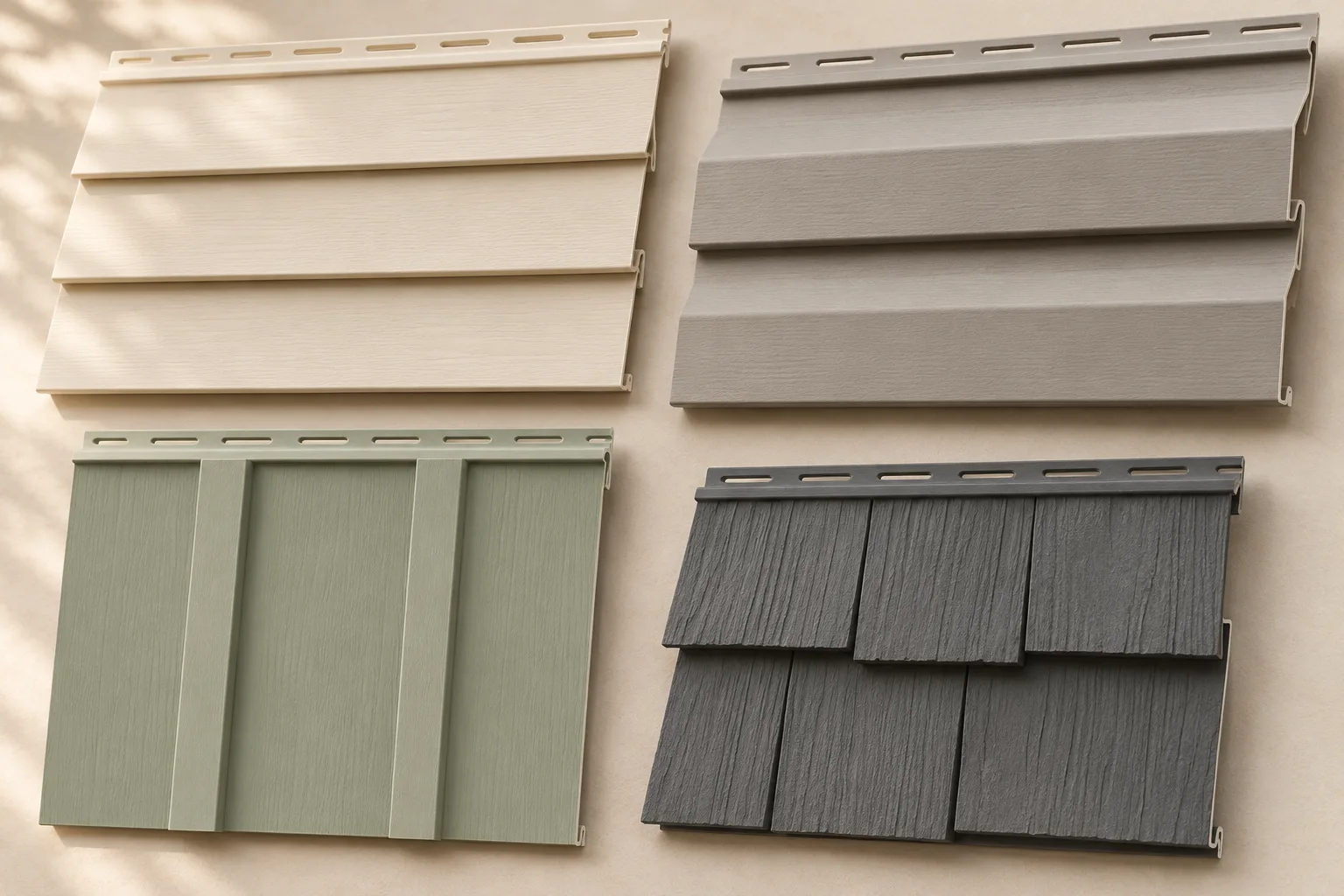 HAUSE visual concept / Illustrative finishes, not a project or product certification.
Identify the damaged area
Label the elevation and record the extent that can be seen safely. Note whether a panel, trim component or larger junction is involved. Give the provider the wider context, including recent work, impacts or water concerns.
Look for the original record
The manufacturer, profile and colour code provide a useful starting point. A spare labelled piece can help. If no records remain, ask how the provider will identify a candidate replacement and what uncertainty remains about compatibility.
Review the cause
A replacement piece does not resolve every reason for damage. Ask whether supporting conditions, movement, impact or an adjoining component need attention. Have any related work described so it can be evaluated alongside the cosmetic repair.
Compare the match in place
Age, orientation and exposure influence the retained appearance. Ask to compare the proposed material at the actual elevation. Discuss the expected visual difference and whether replacing a larger defined area would produce a more coherent result.
Set the work limit
Write down which pieces and accessories are being replaced and what remains. Include access and disposal. A small job can still involve several steps around an opening or corner, so a clear boundary is useful even when the final area is modest.
Record the replacement
Save the repair product and colour details with the original project records. Keep dated photographs and the provider’s care advice. A future repair will be easier to discuss when the earlier substitution or elevation replacement is traceable.
A project conversation
A single damaged strip sits beside an older corner post. Ask whether the replacement can be integrated with the retained receiving detail and how closely the current colour sample matches.
Bring these questions
- Is the replacement system compatible?
- Has the cause been reviewed?
- What is the agreed visual difference?
Read the original guidance
These sources support the principles discussed. Use current instructions for the exact product and confirm applicable local requirements. International technical resources explain mechanisms; they do not establish Canadian approvals.